The nutritional niche – A crucial factor in bee fitness and pathogen virulence
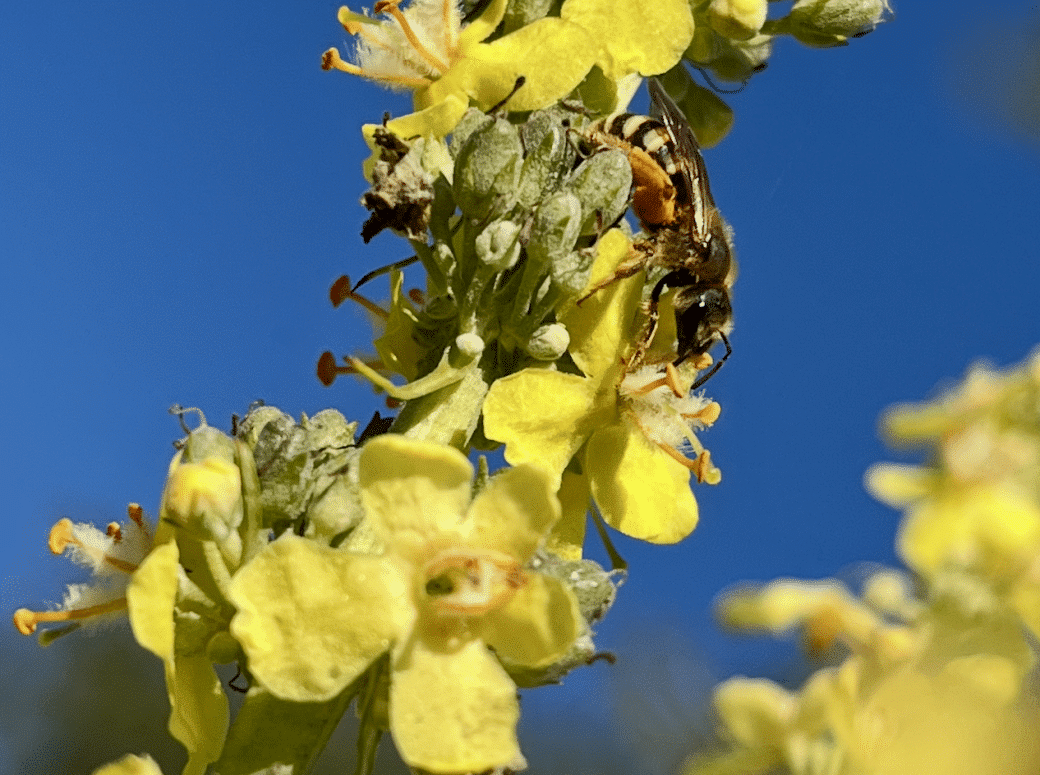

Pollinators such as bees are key species in natural and agricultural ecosystems. They pollinate about 85% of all flowering plants and roughly three‑quarters of crop species. Wild bees, in particular, are strongly affected by declines, leading to far-reaching ecological and economic consequences. One major reason is that both the availability and the quality of pollen and nectar from flowering plants, the main food sources for many bees, are decreasing. In addition, the chemical composition of these resources strongly influences which plants bees visit and affects their health and fitness. In particular, pollen’s chemical properties can directly affect animals’ immune responses and pathogen resistance. However, the interplay between pollen chemistry, pathogen pressure, and bee health remains insufficiently understood and is the focus of this research project. Protected areas serve as reference sites for near‑natural conditions and enable comparisons with intensively used landscapes. The project is carried out as part of a German‑Belgian collaboration.

Integrating results from NutriB2, the goal of NutriBP is to investigate how the chemical composition of pollen affects bee nutrition, immunity, and disease resistance of wild bees. Based on this, we aim to define the nutritional niches of different bee species and identify pollen-derived molecules that influence their tolerance to infections. Ultimately, NutriBP seeks to use this knowledge to support bee protection and strengthen their ecological function.

Based on the results of the NutriB2 project, we hypothesise that the composition of fatty acids, the ratio of protein to fat/lipids, and the amounts and ratios of micronutrients (such as sodium and phosphorus) define the nutritional niche of different bee species. Some of these nutrients/molecules represent key pollen components that significantly impact pathogen virulence.
Furthermore, we propose that various molecules in pollen, including fatty acids and proteins, interact with bees metabolism and contribute to their resistance or tolerance against pathogens. This is because these interactions may activate metabolic pathways involved in the stress response, which are essential for maintaining homeostasis, protecting cellular components, and ensuring survival under adverse conditions.

- Collecting individual bees using hand nets and removing all pollen from the collected foragers for taxonomic identification.
- Collecting flowers, extracting and analysing the chemical composition of pollen, focusing on components such as amino acids and fatty acids.
- Data on pollen collected by bees and its chemical profiles will be integrated to determine the bees’ nutritional niches and important molecules.
- Testing potentially beneficial nutrients/molecules in in vivo feeding assays, measuring, e.g., growth and mortality.
- Potentially sequencing the gut microbiome of larvae and adult bees.
- Sampling the haemolymph of bees for analysing their metabolite profiles related to key molecules and the bees stress responses.
Project in other funding periods
Scientific assistants