The impact of forest management on soil food web structure and functioning
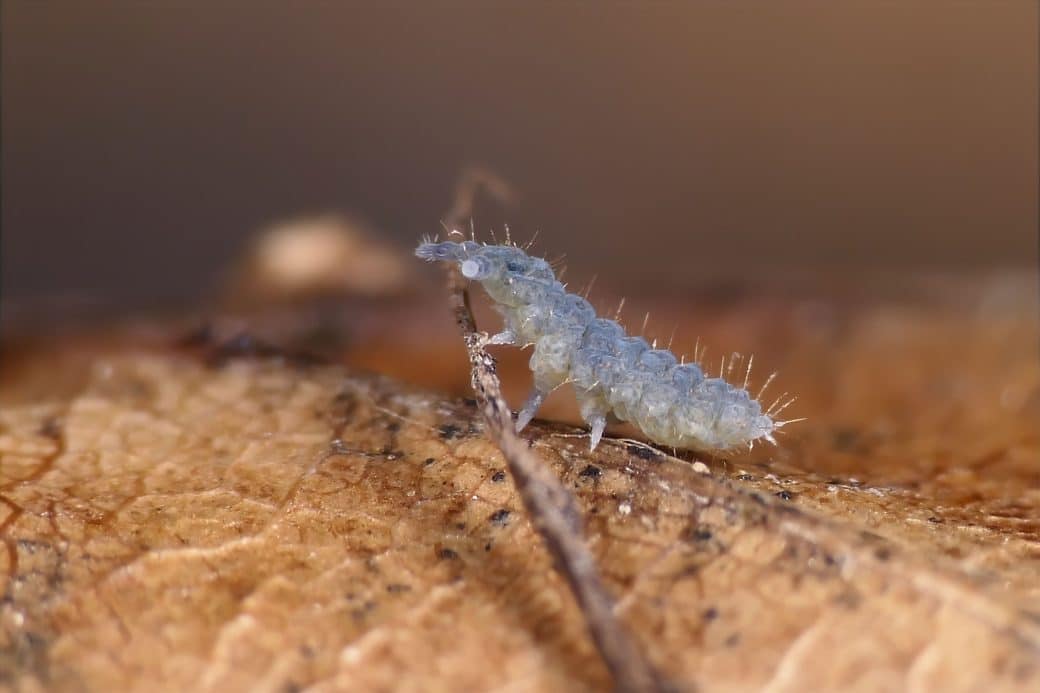

Soil animals play a crucial role in the decomposition of organic matter and the cycling of nutrients. They act as decomposers of dead organic matter, as root feeders and as ecosystem engineers. Together, these interactions form complex food webs that contribute to the functioning of terrestrial ecosystems. Despite their importance, the response of these creatures to accelerating climate change and anthropogenic land use remains poorly understood due to their small size, high diversity and cryptic lifestyle.

Our project aims to assess the effects of forest gap formation on soil animal community and food web structure within the FOrestgap eXperiment (FOX). To achieve this, we will combine traditional biodiversity analyses with state-of-the-art isotopic techniques. Our focus is on the long-term impact of forest gap creation on the abundance, diversity and biomass of soil fauna, as well as on tracing the temporal dynamics of energy fluxes through soil food webs.
By integrating data of previous phases, we are able to investigate short- and long-term effects of forest gap formation and deadwood addition on soil animal food webs (see LitterLinks 2023-2026”)
Furthermore, we will examine the impact of drought on soil microarthropods and explore the potential role of deadwood in mitigating the effects of drought.
Objective:
Here we explore how soil animal communities respond to forest disturbances such as gap formation and deadwood addition as implemented in the FOX. Through repeated field sampling in two-year intervals across the three regions, combined with environmental and microbial data, we assess changes in the density, diversity, and structure of soil fauna. By integrating data of multiple years collected in the previous phases, we investigate both immediate and long-term ecological responses and recovery processes. This approach helps us identify the key factors and species traits that influence the stability, resistance, and resilience of soil food webs, improving our understanding of how forest ecosystems cope with strong disturbances.
Hypotheses:
- Soil macrofauna is more strongly affected by forest gap creation than mesofauna and recovers more slowly.
- Effects of forest gap formation are more pronounced in soils of low water-holding capacity in the Schorfheide-Chorin compared to the other regions
- Deadwood addition mitigates negative effects of forest gap formation by alleviating microclimatic conditions and with time provides additional resources to soil faunal and microbial communities.
Methods:
Soil fauna is collected from each of the four subplots of the 29 FOX sites using soil cores (⌀ 20 cm and 5 cm for macro- and mesofauna, respectively) and extracted by heat (Kempson et al. 1963). In addition, earthworms are extracted by the mustard method (Gunn 1992). Specimens are identified to species or functional groups, and body size measurements are used to estimate individual and community biomass. Microbial biomass and community composition are analysed from the same soil layers using respiration-based methods and phospholipid fatty acid profiling. These combined datasets also provide the basis for reconstructing soil food webs and modelling energy fluxes therein. We assess temporal dynamics, community stability, and biodiversity patterns. Community stability is calculated as the inverse coefficient of variation. Diversity measures are estimated using the coverage-based rarefaction and extrapolation method (Chao & Jost, 2012) implemented in the iNEXT package (Hsieh et al., 2016).
Results and conclusions
Our results from the previous phase show that forest gaps and deadwood both strongly but independently shape soil microarthropod communities across German regions, with responses largely determined by regional environmental conditions, highlighting that forest management impacts cannot be generalized across regions (Junggebauer et al., 2024; Zhang, Zheng, et al., 2025). Oribatid mite densities mainly decreased in forest gaps of the Schorfheide and Swabian Alb, with sandy or shallow soils that are more prone to desiccation, whereas springtail densities increased in gaps in the Schorfheide. In both groups, gaps filtered communities toward smaller, soil-dwelling species adapted to drier conditions (Junggebauer et al., 2024; Zhang, Zheng, et al., 2025).
Deadwood addition had weaker effects on total density but consistently enhanced biodiversity and functional structure. It increased taxonomic richness, functional trait diversity, and trophic differentiation of soil communities by expanding habitat heterogeneity and niche availability. In oribatid mites, deadwood particularly favoured fast-reproducing species, reshaping community composition. Deadwood increased trophic level and trophic diversity of springtails, indicating more complex food-web structure driven primarily by trophic specialization rather than species turnover.
Importantly, our results so far are based on responses of soil communities two years after forest gap creation and therefore represent short-term responses to strong disturbances. We now aim to track recovery and thereby resilience of soil fauna communities after disturbance in the long term.
Objective:
To quantify the changes and recovery of energy fluxes in soil food webs due to forest gap formation and deadwood addition, we will continue to quantify basal resources and trophic positions of major soil meso- and macrofauna decomposers and predators in the FOX. To increase resolution and to account for different feeding strategies within taxonomic groups with known intra-group ecological differentiation, we will separate functional groups of Lumbricidae (epigeic, endogeic) and Chilopoda (Lithobiomorpha, Geophilomorpha). Changes in community level energy fluxes through decomposers will be used to quantify changes in decomposition processes within meso- and macrofauna, while the community level energy fluxes through predators will allow to inspect variations in top-down forces in soil animal communities and how they shift with time after forest gap formation and deadwood addition.
Hypotheses:
- Energy fluxes in soil food webs decrease due to forest gap formation, but decreases are mitigated by deadwood addition.
- Energy channels in forest gaps shift towards increased use of plant detritus and bacteria.
- Deadwood addition fosters energy fluxes via the fungal energy channel, which increase with time as the colonization with fungi in deadwood increases.
Methods:
We will apply compound-specific stable isotope analysis of amino acids (CSIA-AA) to quantify basal resources in a fingerprinting approach (Larsen et al., 2009; Pollierer et al., 2019) and to calculate precise trophic positions, including microbes as intermediate trophic steps (Steffan et al., 2015; Steffan et al., 2013). Using food web modelling and community level flux of energy through bacterial, fungal and plant- based channels (Gauzens et al. 2018, Kühn et al. 2018, Potapov et al. 2019) we will trace changes induced by forest gap formation and deadwood addition.
Results and conclusions
Our previous results using bulk stable isotope analyses suggest that forest gaps promote trophic homogenization of springtails communities by increasing reliance on understory plant resources (Zhang, Junggebauer, et al., 2025). First results of CSIA-AA analyses in combination with food web modelling suggest, that forest gaps reduce total food web energy fluxes, decrease network connectance and shift energy fluxes towards the bacteria-dominated “fast” channel (Zhang et al., submitted). However, the presence of deadwood enhanced fungivory and wood-feeding pathways and thereby restored energy fluxes and network connectance to levels of closed canopy forests, suggesting that deadwood retention can mitigate detrimental effects of forest gaps on soil food webs.
Objectives
Changes in microclimatic conditions, particularly soil moisture, significantly influence soil mesofauna communities. Large deadwood logs probably provide shelter for soil microarthropods by retaining moisture in the soil and boosting microbial activity during decomposition. However, the interplay between abiotic drivers, such as drought, and biotic drivers, such as altered resource availability due to increased deadwood, is not well understood. Our aim is to disentangle these effects by making use of the BEClimWood, which experimentally manipulates rain-out shelters and deadwood availability.
Hypotheses:
- Summer droughts detrimentally affect the density and diversity of soil microarthropods and microbes.
- Deadwood mitigates drought effects under rain-out shelters by providing more favorable abiotic conditions.
- Decomposing deadwood provides additional resources, leading to higher biomass of soil microarthropods and microbes, particularly in absence of rain-out shelters.
Methods:
In line with the BeClimWood design, 30 plots with decomposing deadwood will be set up under the forest canopy and under rain-out shelters across the three regions of the Biodiversity Exploratories. Soil fauna will be sampled from litter and soil using a high-gradient heat canister technique and abundance, diversity and biomass will be analysed. Microbial biomass will be measured using substrate-induced respiration and microbial communities will be assessed by analysing phospholipid fatty acids.
Non-public datasets

Scientific assistants