Core project 10 – Social Ecology


Transformative change is urgently needed to halt the loss of biodiversity and thus, not least, maintain the Earth as a liveable planet. A change in the indirect drivers, namely human values, objectives and behaviour is needed to shift away from short-term profit and consumption towards social justice and a more equitable coexistence with the natural world. Transformative change is possible.
Social Ecology as a Core Project is a response to the constantly increasing demand for a support of the social-ecological research within the Biodiversity Exploratories. The research scope of the Biodiversity Exploratories has increased towards a deeper understanding of social dynamics and individual practices in order to gain a deeper knowledge of the decision-making process of land-use decisions and management.

The Social Ecology core project will ensure a high-quality research infrastructure for social-ecological contributing projects on the causes and consequences of the relationships between land-use, biodiversity, and ecosystem services. The Core Project Social Ecology supports the contributing projects and establishes an empirical monitoring on questions of social-ecological dynamics in order to provide long-term data on e.g. perception, attitudes or values of biodiversity within the Exploratories-regions. These data will serve the projects as background information as well as a data pool to be used by future projects.
In particular, the Core Project aims to:
- set the basis for a regular social-ecological monitoring on perception, attitudes and values of biodiversity of citizens and stakeholder within the Exploratories-regions
- support and advice social-ecological research within the Biodiversity Exploratories
- contribute to knowledge and data integration activities
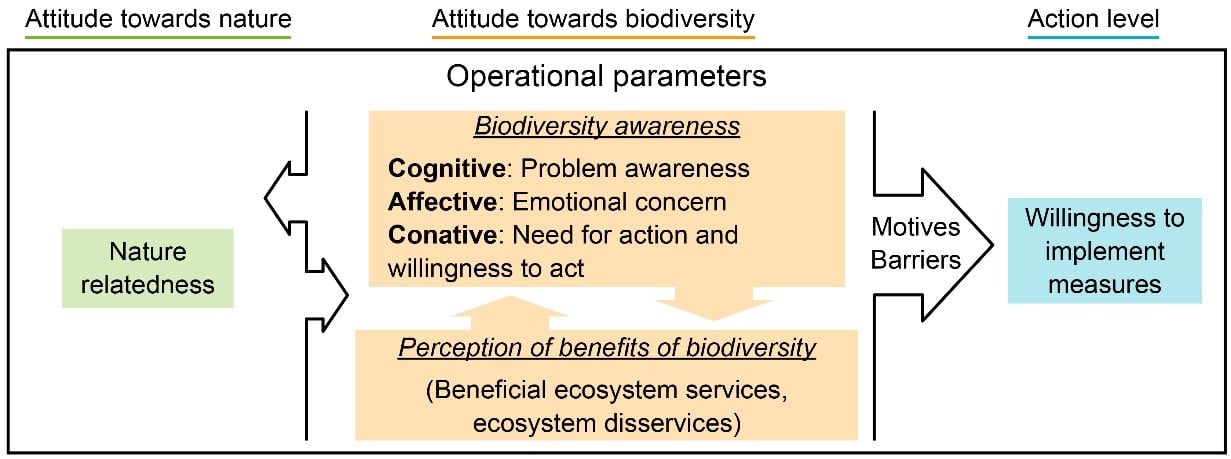
Project presentation on the institute’s website: https://www.isoe.de/en/project/social-ecological-research-infrastructure-for-biodiversity-exploratories

- Stakeholder mapping of local and regional stakeholders, in particular an interest-influence matrix
- Inventory of and consulting on existing social science data
- Long-term quantitative social-ecological monitoring
- Knowledge and data integration
Scientific assistants