Ecoacoustic composition in response to habitat and landscape structure – effects on spatio-temporal sound distribution and its relevance as a cultural ecosystem service
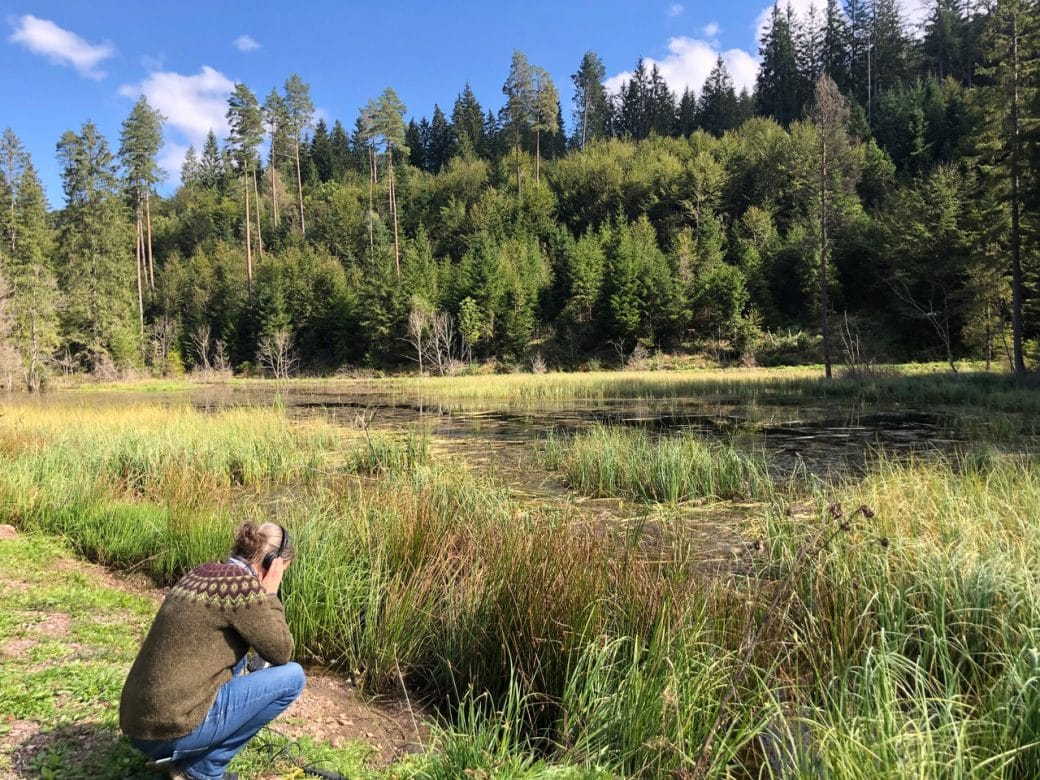

Soundscapes are an important part of natural and cultural heritage, offering inspiration, relaxation, and recreational value. Management of acoustic environments has largely focused on reducing noise pollution due to its major health impacts. However, growing evidence shows that diverse and rich soundscapes—especially those including natural sounds like birdsong, wind, rain, and waves—provide additional health benefits beyond quietness alone, particularly for children. Despite this, the impacts of land use and biodiversity changes on regional soundscapes and local attachment remain poorly understood, as do cultural differences in how soundscapes are perceived.

By integrating natural and social science perspectives, ECHOEScapes seeks to understand local community perceptions of these acoustic environments and examine how they align with objectively measured indicators of soundscape quality and aesthetic value.
Expected outcomes include:
- Identification of key environmental predictors of soundscape aesthetic values.
- Spatio-temporal maps of soundscape quality identifying hotspots of soundscape quality for conservation planning.
- Synthesis analysis of soundscape drivers across European contexts.
- Improved understanding of public perceptions of soundscapes as natural heritage.
The project will offer insights into how landscape management can support natural soundscape protection and strengthen human connections to local environments. Additionally, enhanced indicators for quantifying soundscape aesthetic value from an ecosystem service perspective will be made available for other socio-ecological and biodiversity-health research. By addressing these objectives, the study aims to deepen the understanding of the complex interplay between land use, biodiversity, and cultural ecosystem services.

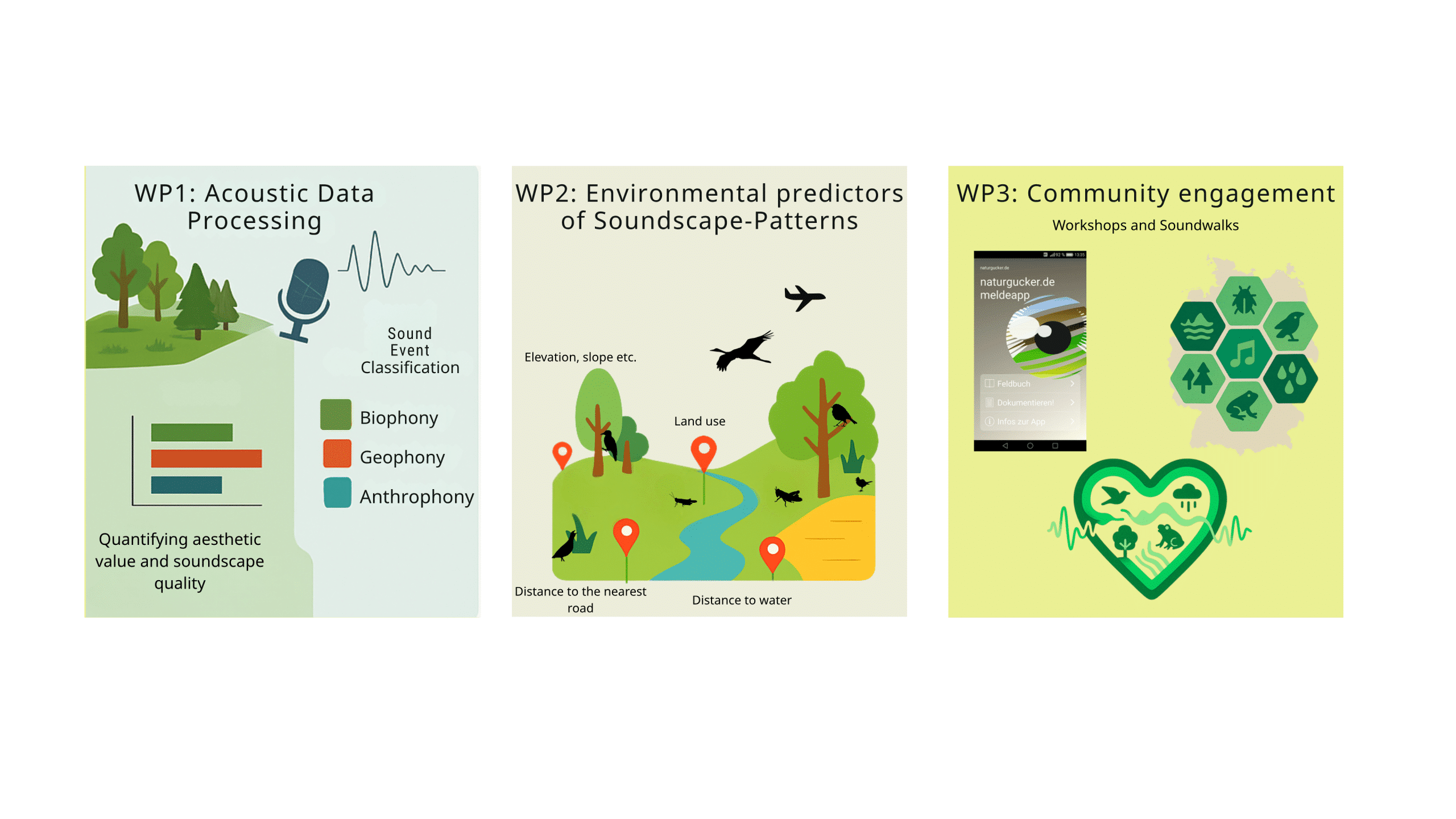
The study employs a multi-faceted approach across three work packages.
- Acoustic data from the BEsound project will be analysed using advanced machine learning to classify sound events (biophony, geophony, anthropophony) and quantify soundscape characteristics such as naturalness, diversity, and uniqueness.
- Spatial and temporal models will link these soundscape patterns to environmental factors, including land use intensity, landscape composition, slope, and proximity to human infrastructure among others. A cross-European synthesis will assess the transferability of these relationships in French and Finnish landscapes.
- Community engagement activities – including questionnaires, soundwalks, and a citizen science initiative – will explore local perceptions of regional soundscapes and their cultural value.
Scientific assistants