Understanding and managing soil health impacts to protect soil-dependent pollinators

Pollinators such as wild bees, hoverflies, and other insects are essential for our environment and food systems. They enable the reproduction of most flowering plants and help secure high agricultural yields. However, pollinator diversity in Europe is declining rapidly. Key drivers include the loss of suitable habitats, climate change, and certain agricultural practices.
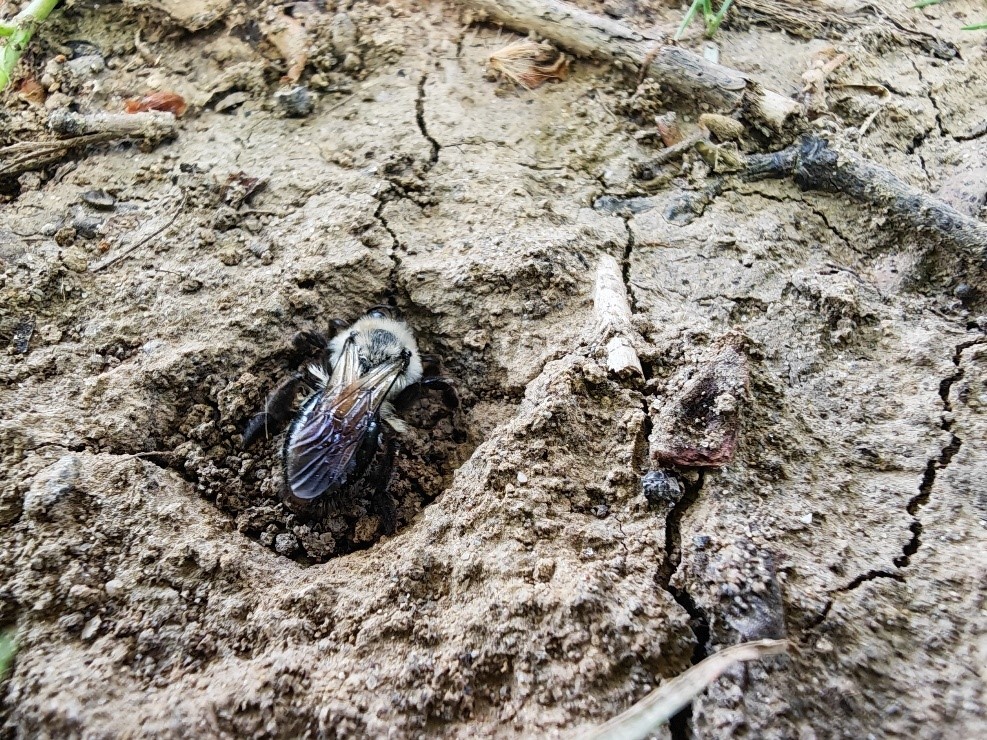
Many pollinator species spend important parts of their life cycle in the soil, for example when building nests or during development. Yet, the soil conditions they require are still poorly understood. At the same time, intensive land use and inappropriate management practices can degrade soil health, reducing the quality of pollinator habitats.
The European research project ProPollSoil explores the link between soil health and pollinators. Its aim is to better understand which soil conditions support pollinators and how sustainable soil management can help protect and improve their habitats.

To achieve this, ProPollSoil collects data on soils and pollinators across Europe, develops new methods to study their interactions, and works together with land managers, scientists, and policymakers to create practical solutions. In doing so, the project supports the goals of the European Union to promote healthy soils and protect pollinators in the long term, for example by producing EU-wide maps of soil substrate availability, soil quality, and the suitability of habitats for pollinators.

- Pan-European field campaign for sampling soil and insect pollinators
- Development of novel soil and insect pollinator monitoring methods, e.g. including eDNA and AI
- Lab studies to fill existing knowledge gaps on how soil management and soil quality impacts pollinators and other soil-pollinator interactions, such as with micro-organisms and other soil living organisms
- Assessment of potential soil and pollinator threats within a co-creation research approach in nine Case Study Areas (CSAs)
- Different modelling approaches to, among others, create EU-wide soil maps
Scientific assistants