Understanding the social-ecological Transformative potential of Farming initiatives
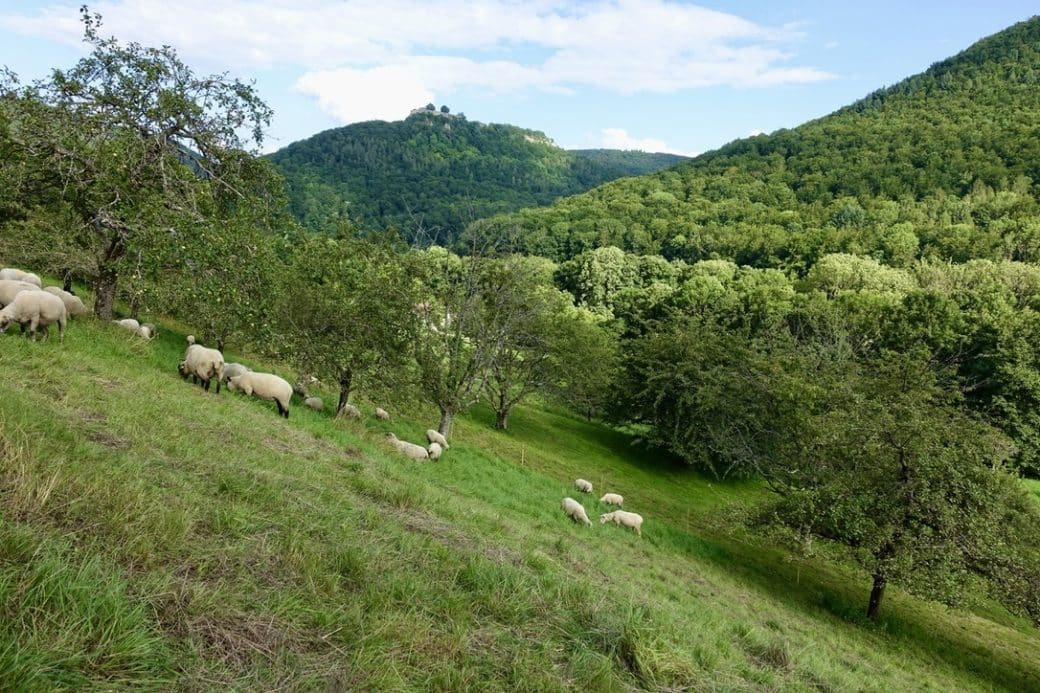

Unsustainable land management patterns are often driven by societal narratives, primarily rooted in relationships with nature that are characterised by extraction and exploitation, leading to increasing consumption and land-use intensification. Altogether, these pose serious threats to biodiversity and people’s quality of life. This entanglement of crises underscores the urgency of tackling the underlying causes of land-use intensification and mobilising transformative change.

In TransFarm, we aim to comprehensively understand the transformative potential of farming initiatives, practices, projects, and organisations in the three study sites of the Biodiversity Exploratories. To do so, we draw on our research as part of VaNaTe about farmers’ values and two existing transformation frameworks: (1) ‘Seeds of Good Anthropocenes’ and (2) values-rules-knowledge.
Specifically, we aim (1) to identify archetypes of farming transformations based on the decision-making patterns of the initiatives, as defined by their values, rules, and knowledge, (2) to characterize these archetypes based on their transformative outcomes, and (3) to explore the hindering and enabling conditions and processes that influence the potential to leverage transformations.
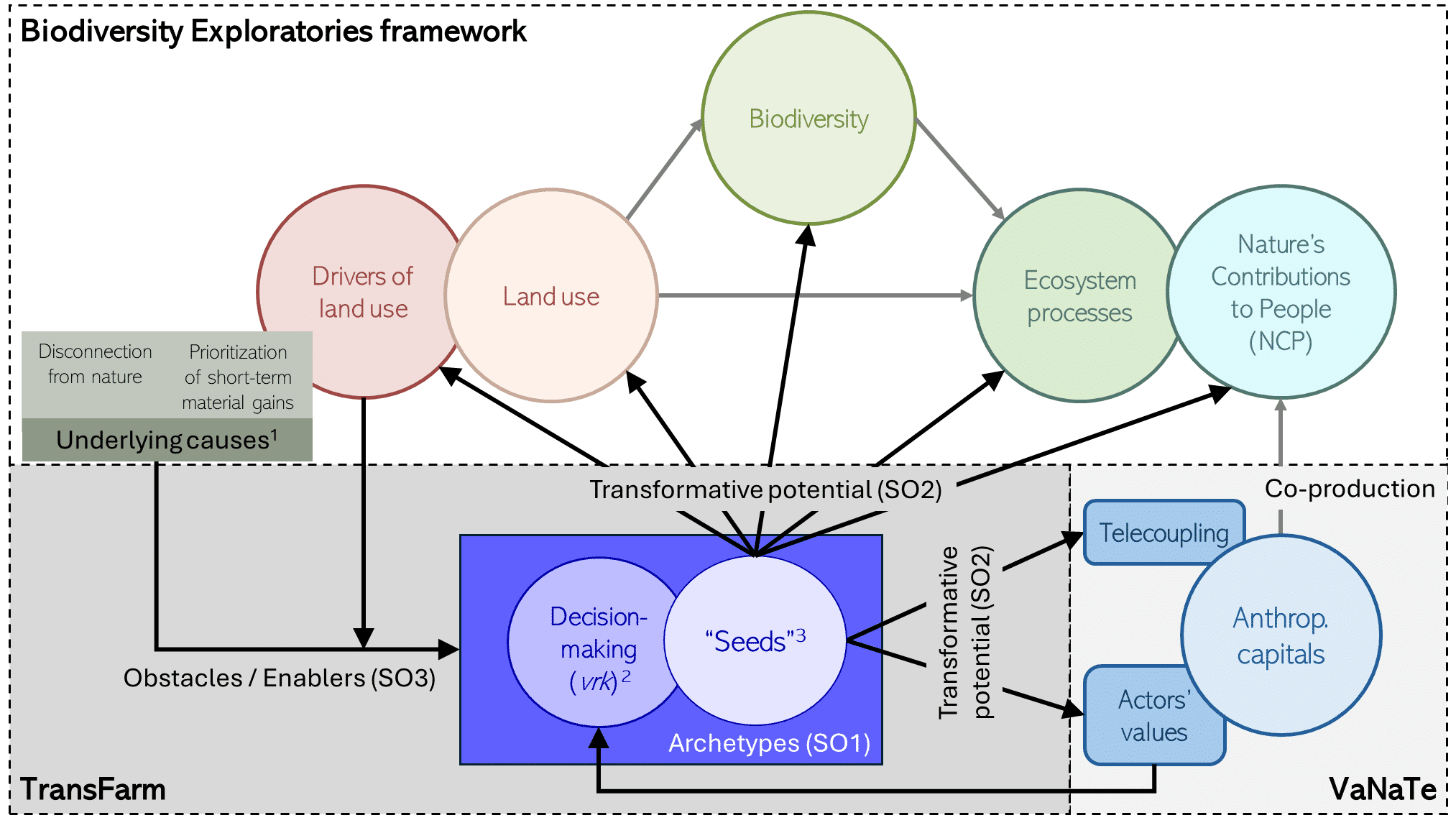

We conduct semi-structured interviews and focus group discussions, which will be analysed through content analysis and multivariate statistics.
Scientific assistants