De-intensification Effects on Methane-Cycling Microorganisms and the Methane Sink Function of Grasslands
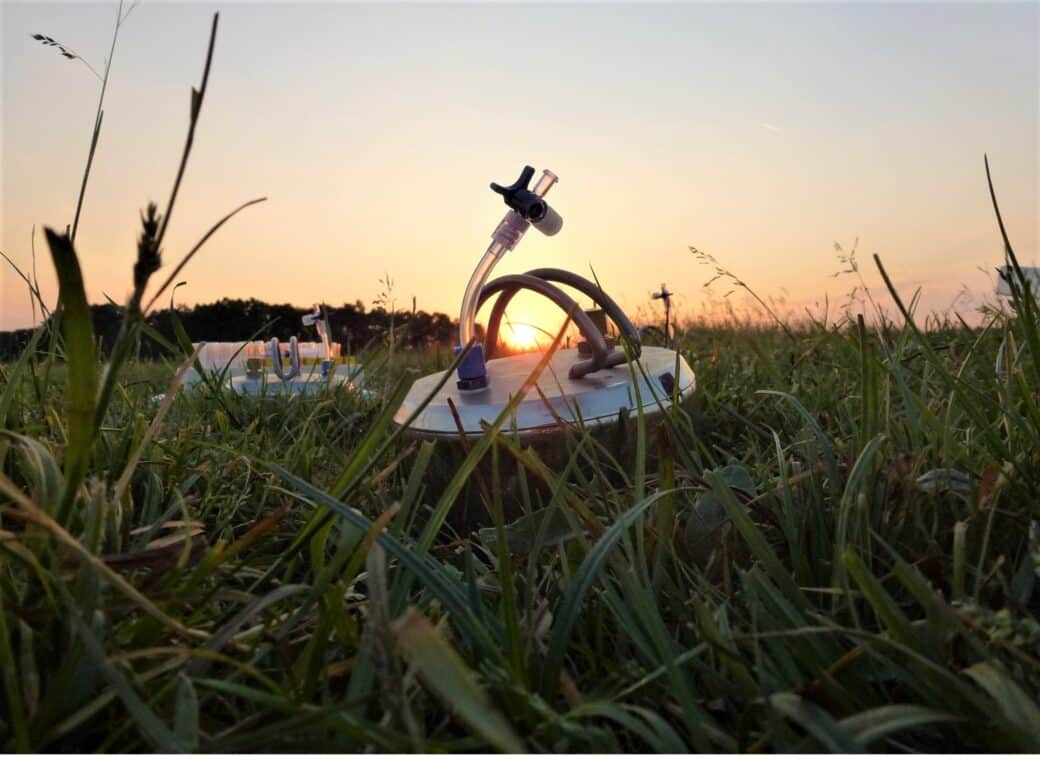

Grassland soils are highly dynamic systems that can act as both sink and source for methane, the second most important greenhouse gas. Accordingly, both methane producing microorganisms, designated Methanogens, and methane consuming microorganisms, called Methanotrophs inhabit grassland soils. In the previous project (BE_CH4, 2017-2022), we showed that the role of grassland soils as a sink or source for methane can change within a year and that sink function is generally affected by land use intensity and nitrogen fertilization. In addition, we were able to link the gene expression of methane-cycling microorganisms to net surface fluxes of this potent greenhouse gas.

MetGrass aims to resolve effects of grassland management measures such as fertilization and mowing as well as long term de-intensification on methane-cycling microbiomes in top- and in subsoil. The project further aims to link these spatial functional biodiversity dynamics with methane net surface flux rates. MetGrass focuses on plots of the joint multi-site experiments REX and LUX and provides mechanistic experiments on soil monoliths on N fertilization levels.

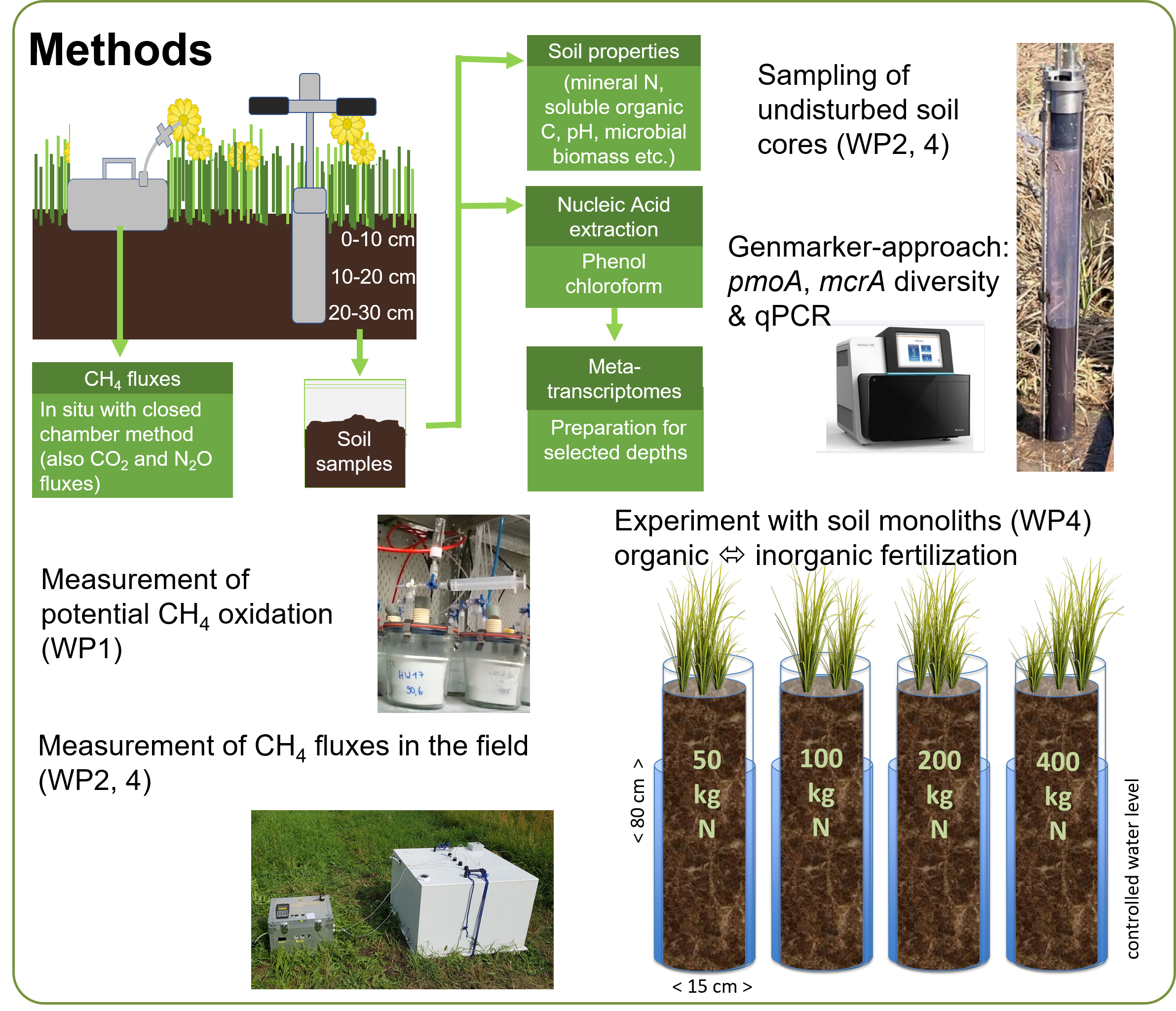
We will quantify the abundance, diversity and activity of methane-cycling microorganisms with a gene marker approach by analyzing DNA/RNA encoding essential steps in methane cycling pathways. This microbiome data will be linked to methane net surface fluxes measured with the closed chamber method or potential methane oxidation rates determined through soil incubation. Information on soil physico-chemical properties and land use intensity will help us to unravel the effects of de-intensification of land-use on the methane sink function of grasslands.

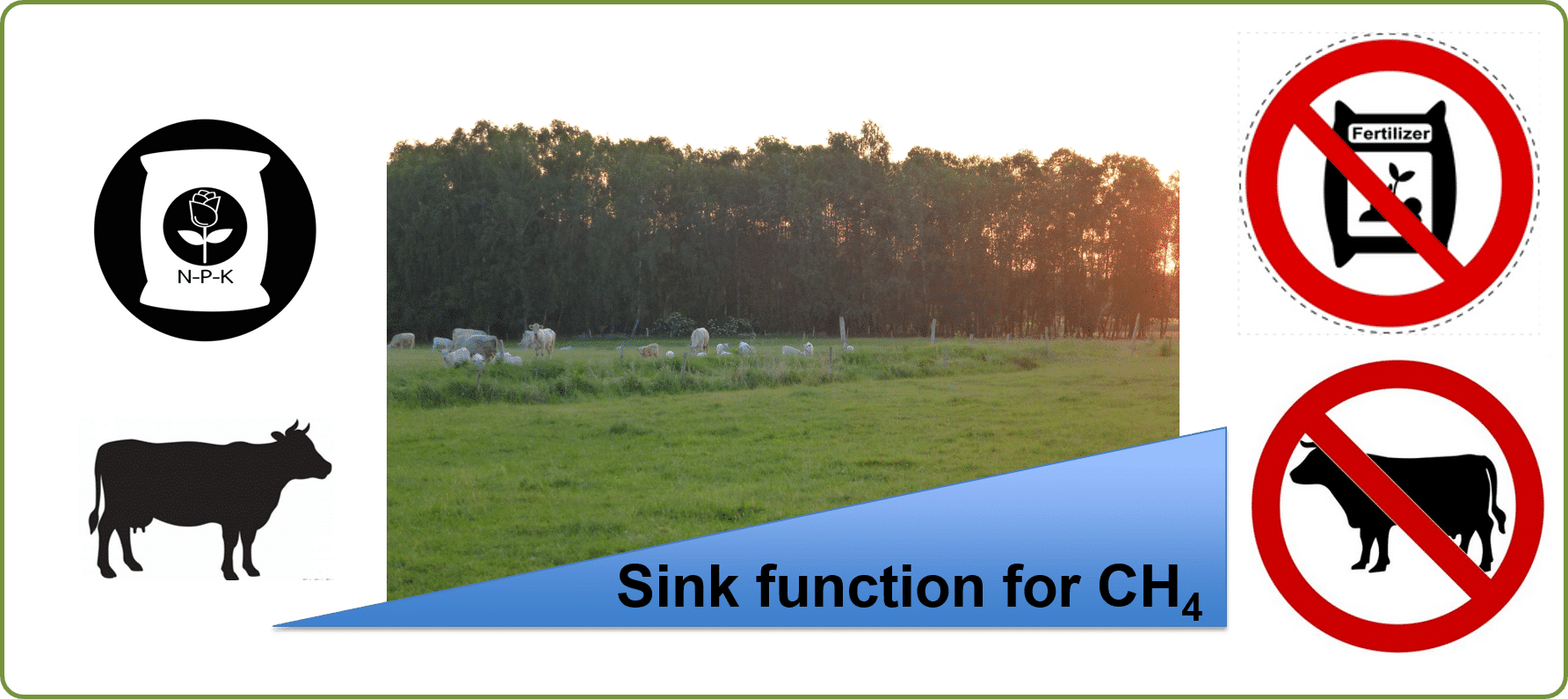
In the phase 2023-2026, we investigated the impact of a three-year experimental LUI reduction (no fertilization, no grazing, one mowing event per year; REX1 experiment) across 45 grassland sites, using 15 historically low land-use sites as a baseline. After three years, land-use intensity reduction had no significant effect on methane oxidation and production potentials as well as on methanotroph gene abundance (pmoA). In contrast, historically low land-use sites showed higher potential to oxidize atmospheric CH4 and greater Upland Soil Cluster γ (USCγ) methanotroph abundance, indicating the potential for long-term recovery of the atmospheric CH4 sink. Decreased methanogen gene abundance (mcrA), reduced soil bulk density and increased soil water content after three years highlight possible mechanisms that can mediate future recovery.
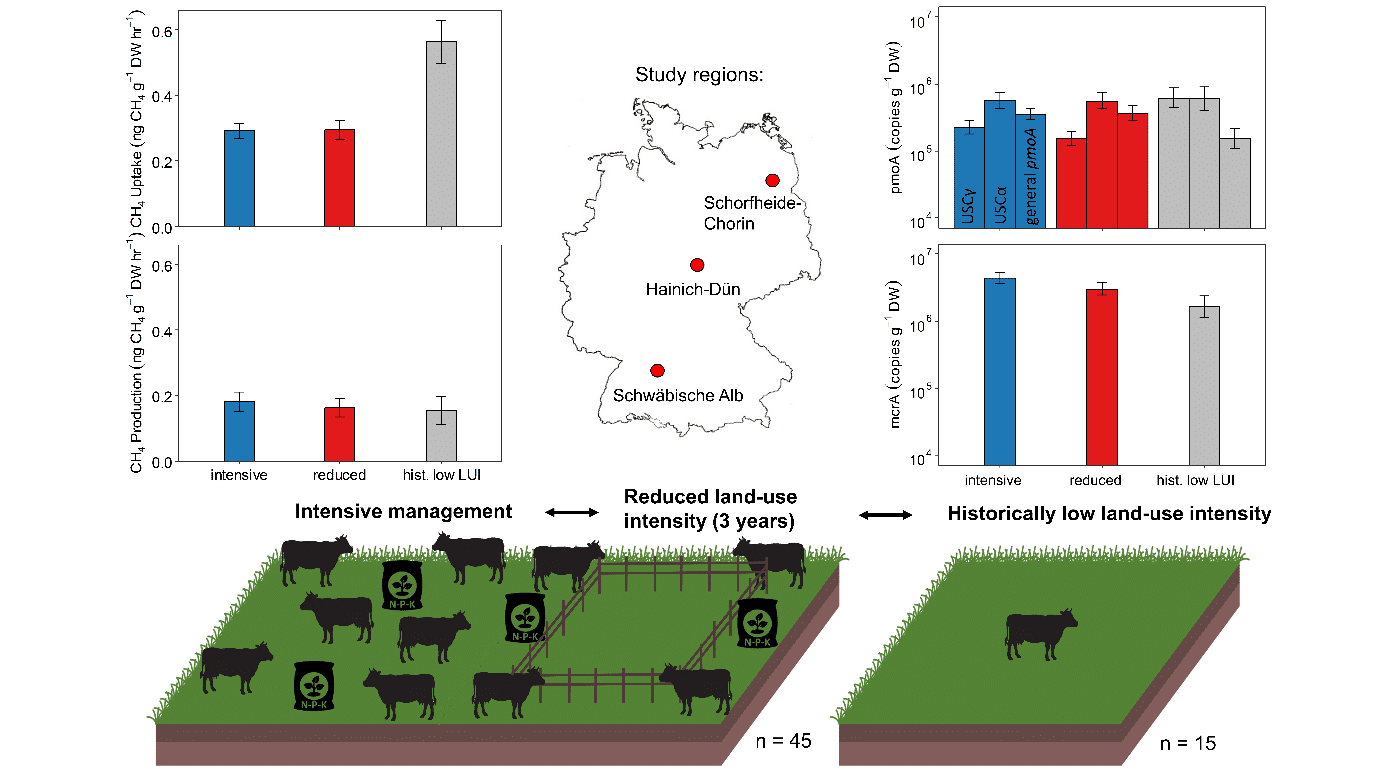
https://www.sciencedirect.com/science/article/pii/S0038071725002755

Non-public datasets

Project in other funding periods
Scientific assistants